|
|---|

|
|---|
|
|---|

|
|---|

|
|---|
|
|
|
|---|
|
|---|
|
|---|
|
|---|
|
|---|
|
|---|
|
|
|
|---|
|
|---|
|
|---|
|
|---|
|
|---|
|
|
|---|

In the Nigerian-produced film for Netflix, “The Black Book,” actor Richard Mofe Damijo plays an ex-security forces agent-turned-deacon, who exacts revenge against the crooked police officers who framed and murdered his son. As he tracks down the bad cops, wrote Wired magazine, he seeks to “dismantle a rotten institution that he helped build.”
The West African country’s military and massive oil industry also serve as important plot points in the film about redemption, which has become a global blockbuster.
More than 70 million people have streamed “The Black Book,” delighting boosters of Nollywood, Nigeria’s version of Hollywood. But, as University of Nigeria lecturer Ezinne Ezepue noted in the Conversation, the film also shines a light on the violent corruption that mars Africa’s most populous country.
Last month, for example, Nigerians staged memorial events for the victims of police brutality who died in clashes with security forces three years ago, reported the Associated Press. Those clashes stemmed from protests against the vaunted Special Anti-Robbery Squad, a unit that has since been disbanded due to its heavy-handed tactics. Fifteen protesters arrested during those events are still in prison, according to human rights activists.
“Nobody is going to be happy when you are unjustly killing people … oppressing them,” said Adebowale Adebayo, a memorial organizer who, coincidentally, is an actor, social activist and online content creator known in Nigeria as Mr. Macaroni.
The military, furthermore, continues to perpetrate “enforced disappearances” – kidnapping by government forces, essentially – in the country’s northeast, added Amnesty International. The organization noted that these disappearances were among many crimes that Nigerian troops committed in the region as they fought against Boko Haram, an Islamic State-affiliated terror group that has been ravaging the region for years.
Gangs also wield significant control of other parts of the country, including vast illicit markets, explained the Global Initiative Against Transnational Organized Crime. Street crime is common. For Al Jazeera, a Nigerian student penned a first-person piece about how he was almost lynched while walking casually in Uyo, a southern city.
Corrupt security forces, terrorists, organized criminals, and petty thugs have made violence so endemic that Nigerians commonly wear magical charms they believe will protect them from bullets. It is not uncommon that someone tests their faith and dies from a gunshot wound, reported Africa News.
It’s like a film that never ends.
Join The Conversation

Kenya will celebrate a nationwide tree planting day Monday, a new public holiday that will see citizens plant trees across the country in an effort to tackle climate change, the Associated Press reported.
Last week, Interior Minister Kithure Kindiki announced that Nov. 13 would be a surprise national holiday and called on Kenyans to make a “patriotic contribution to the national efforts to save our country from the devastating effects of climate change.”
Environment Minister Soipan Tuya added that seedlings would be provided to the public. The decision is part as part of the government’s plan to plant 15 billion trees across Kenya by 2032.
The government has allocated a budget of $80 million to increase Kenya’s tree cover to 10 percent from the current seven percent. This would enable the country to limit its carbon dioxide emissions – trees absorb carbon, while deforestation accelerates climate change – and help meet its obligations regarding climate action, the AP explained.
The impact of climate change in the region and the Horn of Africa has resulted in deep and devasting droughts, which prompted President William Ruto, who took office in 2022, to declare a national day of prayer in February. The rainy season has seen little to no rain for five seasons in a row.
King Charles III applauded the project while he was visiting Kenya two weeks ago, and took part in the tree-planting effort in the capital Nairobi.

Sudanese paramilitaries and their allies took control of cities in Darfur from government forces, a major advance marked by reports of mass killings and fears of renewed ethnic violence in the restive western region, the Washington Post reported.
“The capture of the cities, previously divided between the militias and the army, is the most significant military breakthrough by the Rapid Support Forces since the war began seven months ago, and it threatens to usher in a new chapter of violence by drawing in forces that had kept aloof from the fighting,” the newspaper wrote.
Over the past two weeks, the Rapid Support Forces (RSF) captured three of five regional capitals, including a number of important military bases. Witnesses’ accounts told of massacres of entire families and looting by paramilitary forces in the region. Aid officials said more than 7,000 people had crossed the border into Chad in the first three days of November, more than for the entire previous month.
The United Nations described the situation as “verging on pure evil,” adding that recent reports show that more than 800 people have been killed by armed groups in Ardamata, an area hosting a large camp for internally displaced people, Agence France-Presse wrote.
The civil conflict began in April following a dispute between the RSF, led by Gen. Mohamed Hamdan Dagalo (also known as Hemedti), and the military, led by Gen. Abdel Fattah al-Burhan. Both leaders collaborated to overthrow a civilian government two years ago.
But both sides have since accused the other of atrocities: The military has repeatedly bombed civilian neighborhoods, while the RSF – allied with various ethnically Arab militias – has been accused of mass killings and ethnically motivated assaults in Darfur.
According to the Armed Conflict Location & Event Data project, at least 10,000 people have died in the conflict, but the exact death toll is believed to be higher. Nearly five million people have been displaced.
Analysts called the RSF’s recent seizures a major breakthrough for the paramilitary unit, but warned that this could risk plunging Darfur into another civil war akin to one that devastated the region 20 years ago.
In 2003, the government of now-deposed President Omar al-Bashir unleashed Arab militias, known as Janjaweed, in response to a rebel uprising in Darfur. Janjaweed fighters burned villages, conducted mass killings and used mass rape as a weapon of war.
Later on, numerous Janjaweed units became integrated into the RSF, while certain ex-rebels secured governmental positions as part of a negotiated peace agreement.
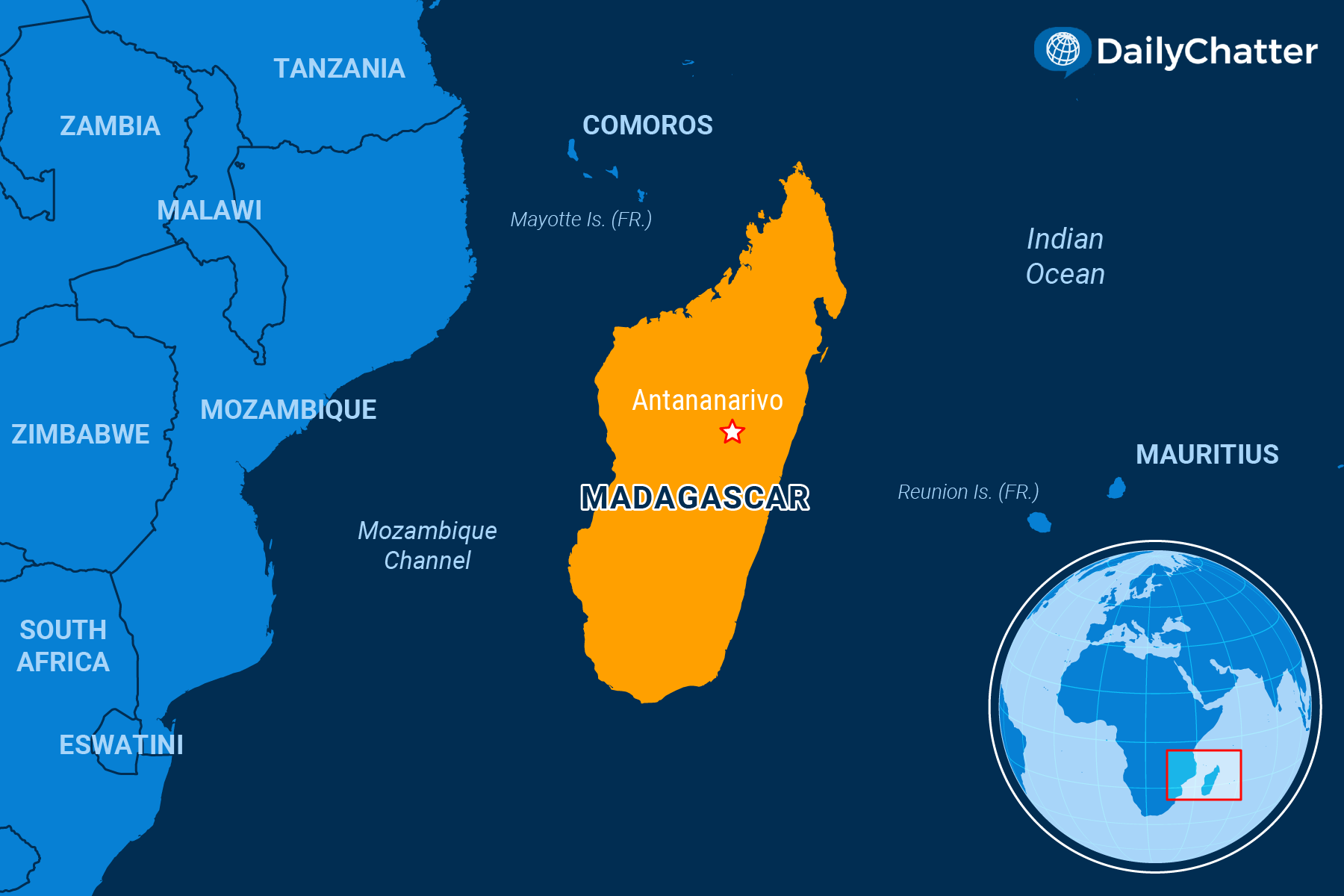
A Madagascan court recently postponed the first round of the country’s presidential election by a week to Nov. 16, after security forces injured opposition candidates at unauthorized political demonstrations.
Police dispersing the demonstrations fired a tear gas canister that struck and injured opposition candidate and former President Marc Ravalomanana’s leg, wrote the Associated Press. Another opposition candidate, Andry Raobelina, sustained an eye injury after a tear gas canister hit him at a different protest.
Tensions are simmering in the Indian Ocean island nation because incumbent Andry Rajoelina, who was president until he resigned in September to run for reelection per the country’s laws, served as interim president for the government that followed Ravalomanana’s removal in a coup in 2009.
Ravalomanana, Raobelina, Hery Rajaonarimampianina – another former president – and other opposition figures in the so-called Collective of Eleven have organized unauthorized protest marches against what they describe as Rajoelina’s repressive regime, wrote the Institute for Security Studies, a think tank. They say that election officials and the security forces have rigged the election in Rajoelina’s favor, reported Africa News. American and European officials have lent credence to those suspicions by publicly saying they would watch the ballot closely.
Still, tear gas, rubber bullets, beatings and arbitrary arrests have marred demonstrations in the island country off the east coast of Africa, prompting the United Nations High Commissioner for Human Rights to appeal to Madagascan security forces to uphold citizens’ freedom to assemble and “refrain from using disproportionate force – to create an environment conducive to free, fair, and transparent elections.”
Rajoelina’s critics also charge that he is not a Madagascan citizen but is in fact French, added Reuters. He has denied the accusation, saying that, while he is a French citizen, he was born and raised in Madagascar.
Rajoelina said he applied for French citizenship because he qualified and he wanted his children to continue studying in France. But he might have become French as part of a Paris-brokered diplomatic deal where he bowed out of politics temporarily in 2013 to defuse a political crisis that was threatening to pull the country into chaos.
Madagascar is a former French colony that experienced brutal oppression under their imperial masters, a London School of Economics publication wrote.
In an interview with Radio France Internationale, Rajoelina said he didn’t agree with the court’s decision to postpone the election. He also rejected claims that a double standard exists in the country because security forces allowed him to hold political rallies but always dispersed those of the opposition.
He was right in asserting that he was not muzzling anyone, or muzzling them effectively, at least.
A new study on a 2,300-year-old medical document suggests that ancient Egypt had more venomous snakes than today, Newsweek reported.
Scientists recently analyzed the contents of the Brooklyn Papyrus, an ancient scroll dating from 660-330 BCE.
Kept in New York City’s Brooklyn Museum, the medical treatise is one of the oldest preserved writings about medicine, and the study of snakes – known as ophiology.
A research team explained that the scroll lists in great detail a variety of snakes, how venomous they were, and how to treat their bites. Still, there are some species that remain unknown, partly because they no longer slither around modern-day Egypt.
Their study focused on 10 unidentified reptiles, including a highly venomous snake that was associated with the ancient Egyptian god Apophis, who took the form of a serpent.
The researchers used a statistical model called “climate niche modeling” to explore how the territories of different African and eastern Mediterranean snakes changed over time. Their findings showed that early ancient Egypt’s climate could have supported nine of the 10 species, adding that the region’s inhabitants dealt with a larger variety of venomous snakes.
This included the “great snake of Apophis,” which had four fangs and a venom that could “make the victim bleed from every orifice,” the team wrote in the Conversation.
They explained that the legendary snake could have been a boomslang that currently resides in the savannas of sub-Saharan Africa. It also sports four fangs and packs a venom that causes fatal hemorrhages.


