Thursday, August 26, 2021

Democracy Is Losing Ground In Africa


AFRICA

Fighting the Undertow

Zambian opposition leader Hakainde Hichilema was sworn in as president Tuesday after a stunning defeat of an incumbent bent on staying put and using all the powers of his office to do so.

What’s remarkable, though, is that former President Edgar Lungu, who blocked internet access during the Aug. 12 election, deployed the military to restrict campaigning and alleged the vote was “not free and fair,” conceded on Aug. 16, saying he would comply with the constitution.

The concession cemented “the southern African nation’s reputation as a bulwark of democracy” on the continent, the Wall Street Journal wrote.

Unfortunately, Zambia is swimming against the tide in sub-Saharan Africa these days.

In its latest annual report, Freedom House rated only eight countries in the region as free. Meanwhile, 42 nations were ranked as “partly free” or “not free.” Freedom House noted how the number of “not free” countries in sub-Saharan has grown from 14 in 2006 to 20 in 2021. These maps illustrate the situation well.

The pandemic has been exacerbating the decline of democracy across the continent, the Council on Foreign Relations wrote. More Africans live under authoritarian states today than in the past two decades.

Despite successes in ejecting longtime dictators in Zimbabwe and The Gambia over the past few years, some African leaders have continued to change laws, manipulate courts, crack down on opponents and rig elections to stay in power, said the US-based National Democratic Institute. The pandemic only made things easier for these leaders, providing an excuse to postpone elections – in Somalia and Ethiopia, for example, and crack down on the opposition as in Uganda.

And over the past 20 years, about a dozen African leaders have changed or eliminated constitutional term limits. The latest examples are in Guinea and Ivory Coast: Both held elections last year in which the incumbents were reelected despite legal requirements that they step down.

The result has been the leader-for-life syndrome. More than a half-dozen of Africa’s leaders are among the longest-serving presidents in the world: Equatorial Guinea (President Teodoro Obiang Nguema – 42 years), Congo-Brazzaville (Denis Sassou Nguesso – 37 years) and Cameroon (Paul Biya– 39 years) to name a few.

There are bright spots of political freedom and stability, says Freedom House, such as Cape Verde, Mauritius and Botswana. Officials in South Africa, which is ranked as “free,” ousted and are prosecuting a former president for corruption. And in Ghana’s 2020 election, former President John Mahama, running as the opposition candidate, rejected his defeat until the Supreme Court upheld incumbent President Nana Akufo-Addo’s victory. Mahama conceded.

Malawi, meanwhile, became a celebrated example after it overturned a fraudulent election through the courts and did a rerun last year. It was the first do-over election in Africa in which the opposition won.

Malawi President Lazarus Chakwera, the victor in that election, warned in Newsweek this week against only looking at the negative examples.

“When the recent election in Zambia defied expectations of violence and contestation with a peaceful transfer of power, few noticed it,” he said. “But here in Africa, democratic backsliding is being reversed when votes for change in Zambia are respected and elections found fraudulent are rejected by the courts and re-run – as they were in Kenya in 2017 and (in) my own Malawi last year.”

He added: “In a world beset by Covid-19, climate change, fear and crisis, it is all too easy to see darkness and miss the light.”

Friday, July 30, 2021

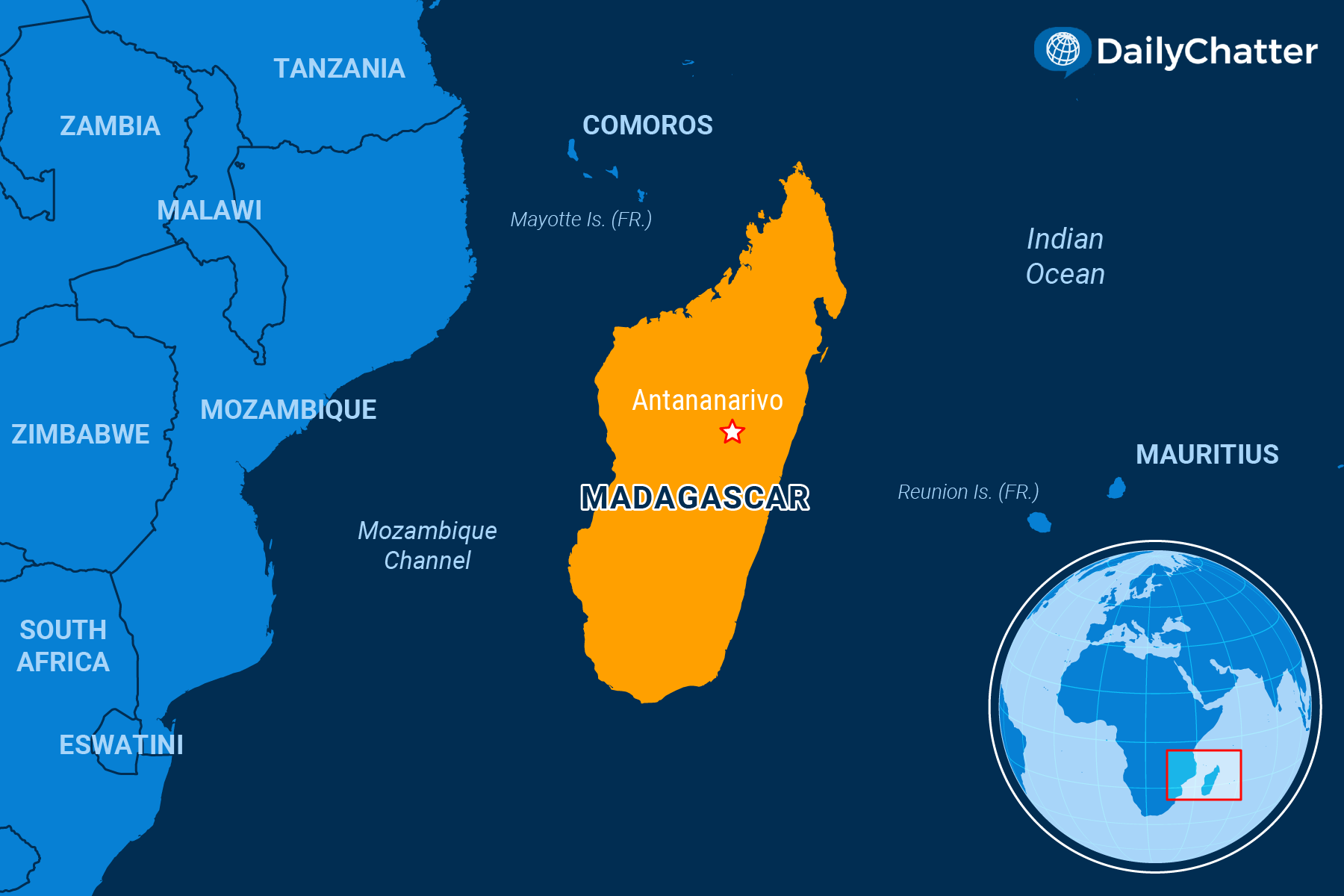
A Famine In Madagascar


MADAGASCAR

A Land of No Yield

Hungry people in Madagascar are eating raw cactus fruit, leaves and locusts to survive the country’s worst famine since the early 1980s.

A woman identified as Tamaria who lives in Amboasary on the African island’s southern coast told the World Food Program that she was growing weaker and more desperate as she saw fewer options to feed herself or her seven children.

“I have no land so I cannot cultivate anything,” said the woman who lives in a 16-square-foot bamboo hut. “We live on wild tubers like fangitse and the red cactus in the forest. We sold all our domestic goods, including spoons. If we find green vegetables and want to cook them, for example, we need to borrow pots from other people. I have nothing left and it is painful.”

Around 400,000 people are facing starvation, the Associated Press reported. Another 14,000 are dealing with catastrophic food conditions. Those numbers are expected to increase significantly over the next few months unless the international community takes action.

Africans often face such harrowing circumstances when their countries are embroiled in violence – civil war, rebellions, terrorism and other phenomena can obviously hamper farming and food distribution. Madagascar has suffered those troubles.

But climate change is to blame for this famine.

As the Washington Post explained, five of the last six rainy seasons have delivered less rainfall than average, hurting agriculture. As a result, dust storms known locally as “tiomena” as well as locust swarms have become more common, further reducing or flat-out ruining harvests.

Malagasies live in crushing poverty – two-thirds earn less than $1.90 a day. Many depend on foraging in the wild for their nutritional needs. Those resources are under threat, too. Writing in the Conversation, University of Cape Town Postdoctoral Fellow Estelle Razanatsoa noted that the Covid-19 pandemic had set back the conservation efforts that were attempting to help local people stop deforestation and other trends that hurt food resources.

The government has responded by accepting humanitarian aid and jailing journalists who draw attention to the problem.

Reporters Without Borders recently condemned Malagasy officials for smearing French journalist GaĆ«lle Borgia for releasing video footage of hungry citizens. Last year, Borgia and the New York Times won a Pulitzer Prize for covering Russian meddling in the country’s elections in 2018.

The winner of that election, Andry Rajoelina, who has come under fire for hawking an herbal remedy for Covid-19, recently took $40 million from the US to help fight hunger, a US Embassy press released showed. Many wonder where it’s going.

Regardless, memories of hunger and hardship will linger, alongside his legacy.


Wednesday, July 28, 2021

South Africa Is Falling Apart


SOUTH AFRICA

Sparking Tinder

The BBC video of a woman throwing her baby out of a burning building illustrates the violence and suffering that has racked South Africa in recent weeks. The baby and mother survived the fire, which looters lit amid widespread civil unrest.

The violence erupted in early July after former President Jacob Zuma began a 15-month prison term for contempt of court, the Associated Press explained. His supporters in KwaZulu-Natal, where he is from, erected roadblocks and burned trucks in protest. More than 300 people died, according to Agence France-Presse. Police arrested more than 2,500 people on theft and vandalism charges.

The riots were the worst since the end of South Africa’s racist, segregationist Apartheid regime in 1994. Private citizens took up arms to defend their business and critical infrastructure, Bloomberg reported. Protesters destroyed 100 mobile phone towers, prompting the South African telecommunications regulator to issue a public call for citizens to guard facilities.

Zuma was convicted on corruption charges. The scandals plaguing him include $20 million in security upgrades for his private compound. A court recently granted his request for a delay in a corruption trial involving kickbacks in a $2 billion arms deal, Reuters reported. He also faces corruption, fraud and money laundering charges.

Regardless, it’s hard to tell if the riots and looting were unrest or an insurrection, as Foreign Policy magazine wrote.

President Cyril Ramaphosa and others claim that Zuma’s allies planned the violence. A Zuma-allied faction of the ruling African National Congress called the Radical Economic Transformation orchestrated the riots because they benefitted from the patronage and corruption that was endemic to Zuma’s regime, argued journalist Benjamin Fogel in an Al Jazeera opinion piece.

But while political affiliation explains how the protests and looting began, other factors clarify why they grew out of control.

Officially, nearly one-third of South Africans are unemployed – that number almost doubles if counting only those younger than 35. Half the country lives in poverty. More than 20 percent lack sufficient food. Inequality, meanwhile, is rampant. The coronavirus hasn’t improved these numbers, of course.

Sello Kgoale, 46, had never stolen anything before. He couldn’t resist pilfering rice, cooking oil and paraffin from a local mall after his neighbors told him that the police weren’t stopping looters.

“I’ve never done anything like this before. I’m ashamed,” Kgoale said in an interview with the Wall Street Journal, relating how successive waves of the coronavirus killed his aged relatives, rendered him unemployed and ruined his chances of launching a new business. “But we just keep getting hit.”

Lack of economic opportunities, not politics, led Kgoale to break the law. Some wonder about Zuma’s excuse.

W

Friday, July 16, 2021

Political Violence In SOuth Africa After Jacob Zuma Is Jailed


SOUTH AFRICA

Apartheid Redux

South Africa is dealing with the worst political violence it has seen since the end of apartheid three decades ago, with deadly riots and looting sparked by the arrest of former President Jacob Zuma, CBS News reported Wednesday.

Officials said that at least 72 people have died over the past week.

Meanwhile, arrests have topped 1,000 while more than 600 stores have been looted: The unrest has crippled KwaZulu-Natal and parts of Johannesburg and blockaded major supply routes, resulting in fuel and food shortages in those areas, according to the Washington Post.

The violence began when Zuma was jailed for refusing to appear before a commission investigating corruption during his nine years in office.

Zuma’s supporters took to the streets in protests, but the demonstrations soon devolved into riots fueled by ongoing poverty that has been worsened by the coronavirus pandemic.

Authorities, meanwhile, are probing whether former officials affiliated with the ex-president are involved in instigating the violence.

Still, political analyst Ralph Mathekga blamed South Africa’s economic woes, unemployment and inequality for the violence.

“It is simply feedback (reflecting the) discontent,” he said.

J

Tuesday, July 6, 2021

France's Role In West Africa


WEST AFRICA

The Hardest Word

President Emmanuel Macron recently apologized for his country’s role in the massacre of thousands of Rwandans in the 1990s when Paris supported the African country’s murderous regime. “In ignoring the warnings of the most clear-sighted observers…France bore damning responsibility in a chain of events that led to the worst,” he said, asking for forgiveness, according to the Economist.

The mea culpa underscores France’s attempted reset in Africa.

More concretely, Macron is also pulling back on France’s military presence on the continent, especially in Mali and surrounding nations where the former colonial power has long dispatched troops in the name of stability, the Washington Post reported. In recent years, French, as well as American and other Western troops, have been fighting militants affiliated with al Qaeda and the Islamic State.

Writing in the Conversation, King’s College London doctoral candidate Folahanmi Aina saw the pullout as a chance to develop new ways to assist the region. If France and others could help develop good governance in the region – functional executive and legislative branches, courts and other institutions, for instance – then they could break the cycle that leads to violence, he argued.

But others see a disaster in the making as weak governments face off against Islamist militants. Macron is eyeing the withdrawal of more than 5,000 troops from Mali and the region. That followed the dismay over a recent coup he suggested could result in new leaders with Islamist views, Voice of America reported.

Meanwhile, nearby Burkina Faso has already seen villages descend into lawlessness when the French troops depart, Al Jazeera noted. The situation is so dire that thousands hit the streets in protest over the weekend, demanding the government step up, Africanews reported.

Such fears are one reason that American officials have not been quick to support French efforts to expand United Nations forces in the region to replace departing French soldiers, Foreign Policy magazine wrote.

Still, Macron is answering the demands of the French public, which is sick of the country’s overseas adventures. The war against terror has created tensions in secular France, too.

France is among the most hated countries among radical Islamists, VICE News wrote. Islamist terror attacks have killed scores in France while far-right French politicians cite the violence as evidence for stricter policies against non-French (read: Islamic) influences in society. The gulf, some say, is widening because of these policy moves. One notable exception is in the French military, the New York Times noted, where Muslim soldiers are well integrated.

Regardless, moves big and small will be necessary for France to turn the page on this episode in its history abroad, and the repercussions at home.


Thursday, June 3, 2021

South African Women May Soon Be Able To Marry More Than One Man

 https://www.sapeople.com/2021/05/29/polyandry-will-sa-women-soon-be-able-to-marry-more-than-1-man/

Tuesday, June 1, 2021

Namibia-Coming To Terms


NAMIBIA

Coming to Terms

Germany officially acknowledged committing genocide against Namibian ethnic groups during the colonial period more than a century ago, CNN reported.

German Foreign Minister Heiko Maas said over the weekend that Germany will support Namibia and the victims’ descendants with $1.3 billion for reconstruction and development and ask for forgiveness for the “crimes of German colonial rule.”

The reparations are related to the massacre of up to 80,000 ethnic Herero and Nama by German troops during an anti-colonial uprising between 1904 and 1908. Historians say that the conflict began when the Herero people rebelled against colonial troops over land seizures.

Germany had first offered its formal apology for the conflict in 2004.

The Namibian government welcomed the recent announcement, but victim groups rejected the deal as “a sellout job.” Such critics demand that Germany pay reparations to the descendants of those killed and pushed off their land.

Vekuii Rukoro, the Paramount Chief of Herero people and a lawmaker, said they were not part of the discussion between the German and Namibian governments, which began in 2015.

Friday’s announcement comes a day after French President Emmanuel Macron publicly acknowledged France’s “overwhelming responsibility” in the 1994 genocide in Rwanda.

France has been accused of failing to prevent the genocide and of supporting the Hutu regime, even after the massacres had started: Hutu militias – supported by the government – killed around 800,000 ethnic Tutsis.

D