Thursday, November 11, 2021

Former Souht African President FW de Klerk Dies At Age 85


Former president FW de Klerk, 85, has died

accreditation
-04:20
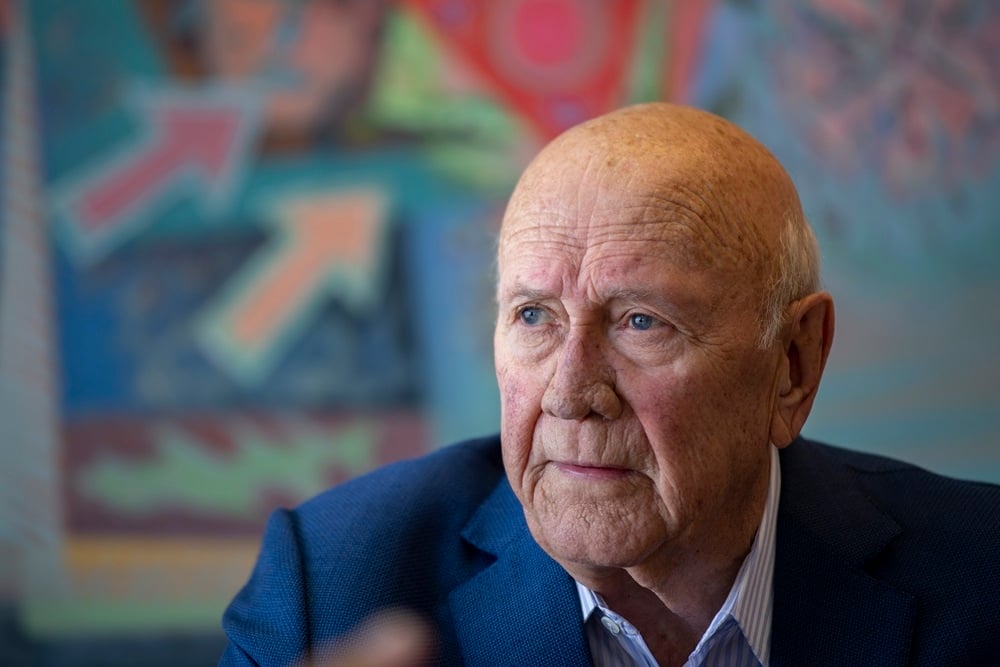
Former South African State President F. W de Klerk speaks during an interview on January 27, 2020 in Cape Town.
Gallo Images/Die Burger/Jaco Marais

FW de Klerk, the last president of apartheid South Africa and a key actor in the country's transition to democracy, has died.

The FW de Klerk Foundation's spokesperson Dave Steward confirmed his death to News24 on Thursday. "The former president died earlier this morning at his home in Fresnaye after his struggle against cancer. He was 85-years-old. He is survived by his wife Elita, two children Susan and Jan, and his grandchildren."

President Cyril Ramaphosa is expected to announce details of De Klerk's state funeral in due course. 

OBITUARY | FW de Klerk: Apartheid president who helped dismantle system despite history and heritage

In a statement on 8 June 2021, the foundation said he was diagnosed with mesothelioma - "a cancer that affects the lining of the lungs" - in March 2021. He was receiving immunotherapy for the illness.

De Klerk was the head of state from September 1989 until May 1994 and became one of the country's two deputy presidents after the first multi-racial, democratic election in April 1994.

The son of a National Party senator and minister, De Klerk entered Parliament in 1972 after training as a lawyer and winning his seat in Vereeniging, in what was then known as Southern Transvaal. He was appointed to the Cabinet of prime minister John Vorster in 1978 and served in various portfolios, including Minister of National Education. De Klerk was also a member of the Broederbond, the secretive Afrikaner organisation then active in politics and society.

He succeeded PW Botha as the leader of the National Party in February 1989 after Botha suffered a stroke and resigned from the party leadership. He became president seven months later after Botha quit the post in anger and the National Party won a whites-only election with a reduced margin.
slide 1 of 1

On 2 February 1990, exactly one year after taking the reins as National Party leader, De Klerk announced to Parliament that he was unbanning the ANC, SACP, PAC and other liberation movements, and that he was releasing Nelson Mandela unconditionally. This led to a multi-party negotiation process between 1990 and 1994, paving the way for the democratic election.

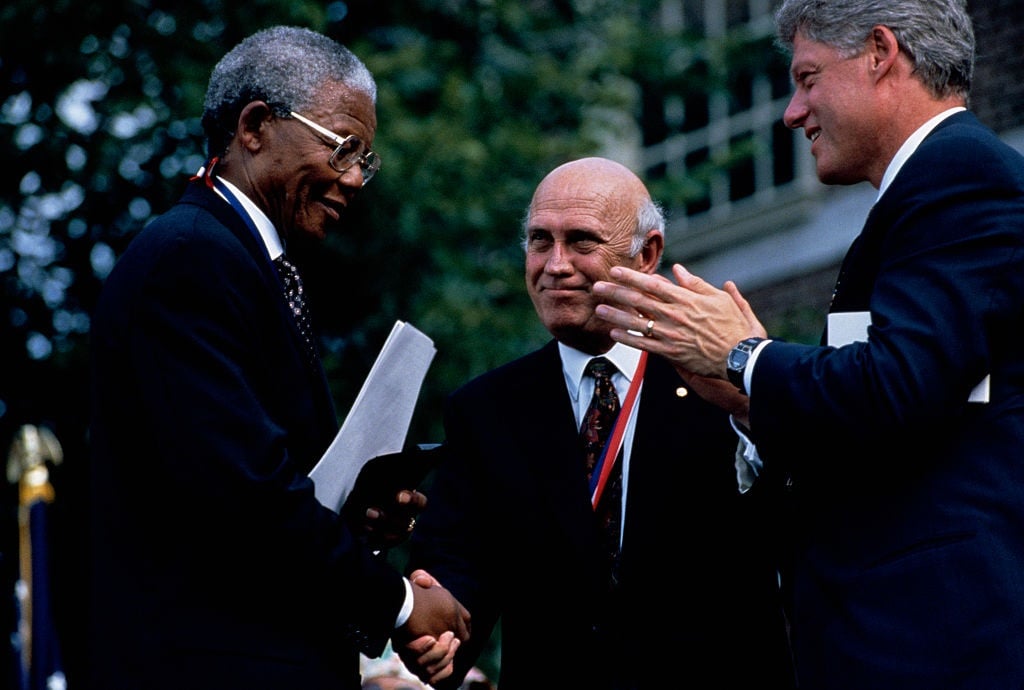
The 1993 Nobel Peace Prize was jointly awarded to De Klerk and Mandela, who became the country's first democratically elected president the following year.

WATCH | Hearse leaves former president FW de Klerk's home in Cape Town

A white hearse with hazard lights flashing left late former president FW De Klerk's home in Fresnaye on Thursday afternoon. The only sound was the snapping of camera shutters as photographers captured the moments after the announcement of his death.

ALSO READ | FW De Klerk's 1990 address to Parliament: The day the apartheid president broke political deadlock

De Klerk became the first leader of the opposition after the election and led his party from the Government of National Unity in June 1996. He retired from active politics in August 1997.

He testified at the Truth and Reconciliation Commission on behalf of the National Party in August 1996 and May 1997, where his apology for apartheid was criticised as insufficient.

After his political career, he launched a foundation in his name, which sought to play a role in civil society as a watchdog and think-tank. He also became involved in a global leadership initiative called The Elders, consisting of former heads of state who advocated for the rule of law and human rights.

Recently, De Klerk became mired in controversy. In 2012, he defended aspects of apartheid during an interview with CNN's Christiane Amanpour and in 2020 he refused to concede that the system was a crime against humanity.

He is survived by his wife Elita (68), whom he married in November 1998, son Jan (57) and daughter Susan (52). His son Willem died of cancer in October 2020 at the age of 53. His former wife, Marike, whom he divorced in 1998, was murdered at the age of 64 in 2001.
You have invested in the future
Your News24 subscription is an investment in independent journalism. Thank you. Your support strengthens our ability to hold power to account and unearth stories you can trust.
Read subscriber articles

Wednesday, November 10, 2021

Mauritania-Caught In The Middle


MAURITANIA

Algeria recently accused Moroccan forces of killing three Algerian citizens who were driving a truck from the Mauritanian capital Nouakchott to the Algerian city of Ouargla. As Agence France-Presse explained, Morocco’s regional rival, Algeria, supports the rebels who are fighting for independence for Western Sahara, a coastal region on the Atlantic Ocean that Morocco claims as its sovereign territory abutting the Mauritian border. Morocco, meanwhile, alleged that rebels were carrying weapons in the truck. Still, they denied that Moroccan forces had carried out the strike, suggesting instead that the truck hit a mine, the Middle East Monitor wrote.

To say Mauritania is in the middle of things would be an understatement. Mauritania signed a peace accord with the Western Sahara rebels and gave up its claims to the region in the late 1970s, the Washington Post wrote. Now its diplomats are working to bring peace to the region, according to Morocco World News.

An American ally in the war against terror despite the voices of critics who think officials are too quick to compromise human rights, as Middle East Eye wrote, Mauritania criminalized slavery only in 2007. The Forest Park Review recounted a US State Department-sponsored fact-finding mission on slavery with the Chicago-based Abolition Institute in the West African country that noted how slavery is alive and well in the country.

Yet developing Mauritania, a massive but sparsely populated country that is six times the size of Florida but with only 4 million residents, is seeking to avoid conflicts like those between Morocco and Algeria while peacefully growing its economy and navigating the powerful ideological and political forces that sometimes threaten to tear the country apart.

This summer, Mauritanian officials arrested former president Mohamed Ould Abdel Aziz on corruption charges related to offshore oil projects, Reuters reported. The detention was the culmination of a power struggle between Aziz and current President Mohamed Ould Ghazouani in a nation that has a long history of coups and violent power transitions, added World Politics Review.

Ghazouani is trying to make his mark. With Amazon CEO Jeff Bezos, Britain’s Prince Charles and French President Emmanuel Macron, he’s proposed a massive new reforestation project in the Sahel region of Africa – which also touches Mauritania – for example, to tackle climate change, according to the Daily Maverick, a South African news magazine. He’s trying to steer payments to impoverished people to reduce inequalities originating in slavery, the Economist wrote.

Also, he is working closely with the World Bank and International Monetary Fund and looking into natural gas exploration to grow the economy after the coronavirus pandemic, which hit a country that is deeply impoverished.

As its neighbors’ rattle sabers, Mauritania seems satisfied with cultivating its own garden, which is a good thing because that garden is still mostly full of weeds.

T

Tuesday, November 9, 2021

Ethiopia-A Race To The Bottom!


A Race to the Bottom

ETHIOPIA

Ethiopian rebel forces advanced toward the capital, Addis Ababa, this week, marking a turning point in a civil war that began a year ago, CNBC reported Monday.

Ethiopia has been plagued by a civil conflict in the Tigray region between government forces and the Tigray People’s Liberation Front. Federal forces initially succeeded in overthrowing the TPLF but the tide turned in June when Tigrayan fighters took back the regional capital.

Over the weekend, nine anti-government groups announced an alliance called the United Front of Ethiopian Federalist and Confederalist Forces with the goal of overthrowing the government. The alliance also includes the TPLF.

Prime Minister Abiy Ahmed’s government has issued a six-month state of emergency and instituted a draft.

Some have expressed concern that authorities have been arresting Tigrayans in the capital, sparking fears of ethnically motivated violence, Reuters reported.

The tense situation risks plunging Africa’s second-most populous nation into chaos, and has prompted regional and international powers to press for negotiations between the warring parties. The hostilities have forced the United States and Canada to withdraw their non-essential diplomatic staff in Ethiopia.

The conflict in Tigray has killed thousands, displaced more than two million and left 400,000 people in the region facing famine.

United Nation officials and the Ethiopian Human Rights Commission released a joint report last week saying that “all parties to the conflict in Tigray have, to varying degrees, committed violations of international human rights, humanitarian and refugee law, some of which may amount to war crimes and crimes against humanity.”

The US has threatened to impose more sanctions on the country if the violence continues. Even so, tens of thousands of Ethiopians marched in the capital Sunday to denounce the US and support Abiy.


Friday, November 5, 2021

Ethiopia Faces A Potential Civil War


ASSESSMENTS

Ethiopia’s Future Is at Stake as Tigray Forces March On

10 MIN READNov 4, 2021 | 18:59 GMT

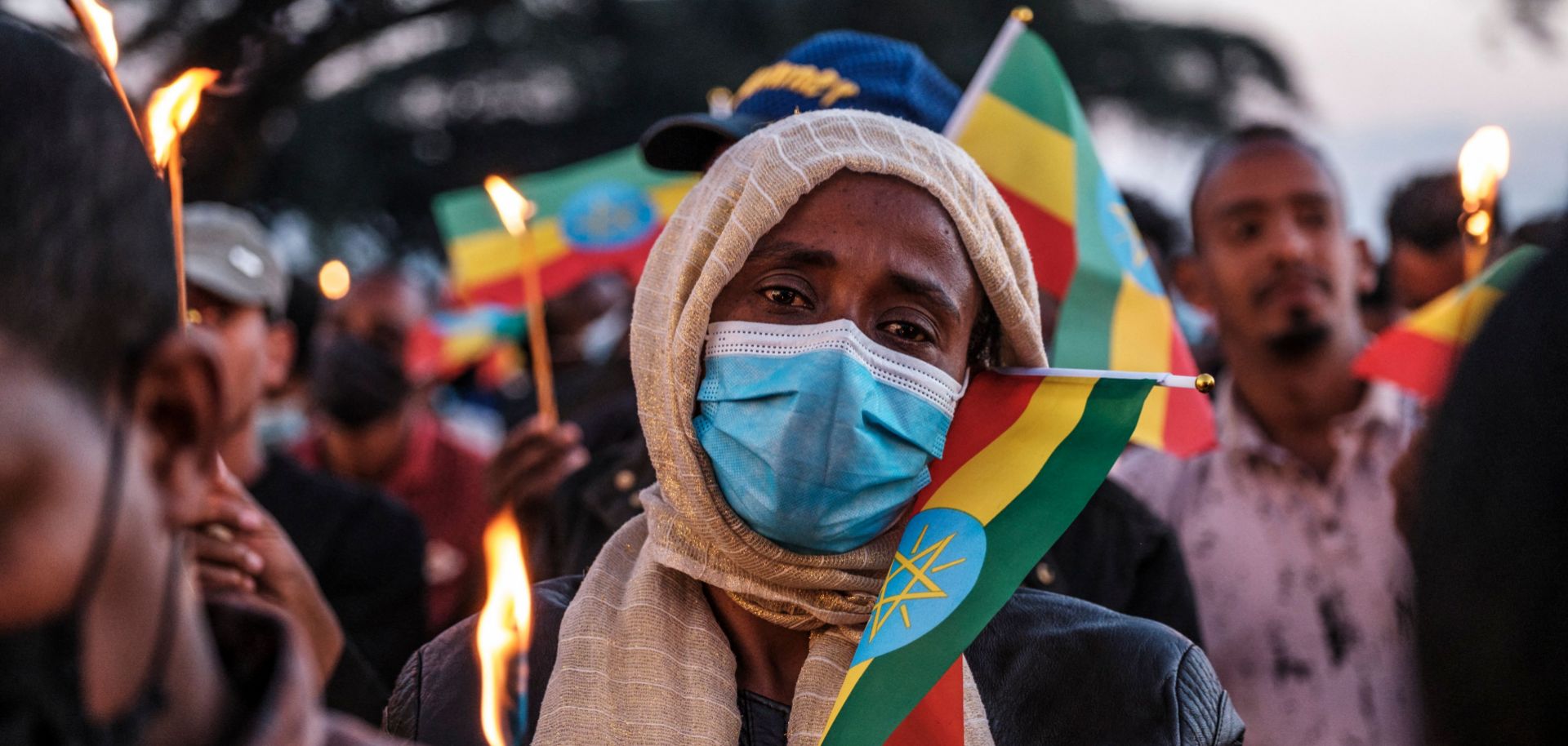
A woman holds a candle during a memorial service for the victims of the Tigray conflict in Addis Ababa, Ethiopia, on Nov. 3, 2021.

A woman holds a candle during a memorial service for the victims of the Tigray conflict in Addis Ababa, Ethiopia, on Nov. 3, 2021.

(EDUARDO SOTERAS/AFP via Getty Images)

With a quick negotiated settlement unlikely, Ethiopia’s Tigray war is reaching a critical juncture that will permanently scar Ethiopian society and could potentially collapse the country, raising the risk of diplomatic disputes and even violence elsewhere in the Horn of Africa. Just shy of the one-year anniversary of launching the war against the northern Tigray region in November 2020, Ethiopian Prime Minister Abiy Ahmed’s government declared a nationwide state of emergency on Nov. 2 amid fears the Tigray People's Liberation Front (TPLF) and allied groups were preparing to launch an offensive on Addis Ababa after a series of military advances. Earlier in the day, the Ethiopian capital city’s municipal government gave its residents 48 hours to register their arms and warned them to prepare to defend their neighborhoods. 

  • Addis Ababa’s call to arms follows a similar call on Oct. 31 by the regional government of Amhara, the site of the recent fighting, asking residents to hand over weapons and vehicles to the government for use in the “survival campaign.”
  • On Nov. 1, TPLF spokesperson Getachew Reda told Reuters, “if achieving our objectives in Tigray [requires] that we march to Addis Ababa we will, but we are not saying we are marching to Addis Ababa.” 
  • The U.S. embassy in Ethiopia issued a security alert on Nov. 2 urging “U.S. citizens seriously reconsider travel to Ethiopia and those who are currently in Ethiopia consider making preparations to leave the country.” The embassy added that its personnel was barred from traveling outside of Addis Ababa. On Nov. 3, the U.S. State Department also authorized a voluntary departure of non-essential U.S. government employees from the country. 

The TPLF and the allied Oromo Liberation Army (OLA) have made quick military gains over the last week that could enable an offensive on Addis Ababa. The gains are a sudden reversal of events after Abiy launched an offensive to retake parts of Amhara less than a month ago. On Oct. 30-31, TPLF forces seized the towns of Dessie and Kombolcha on the strategic A2 highway connecting the Tigray capital of Mekelle with Addis Ababa. At the same time, the OLA claimed that they seized control of several towns south of Kombolcha on the highway leading to Addis Ababa. Although some of the seizures have not been independently verified, the governments’ reactions suggest significant retreats by Amhara and Ethiopian forces. With the seizures, the OLA and TPLF now control most of the A2 highway to Ethiopia and can use it to help push further southward. The southern portion of the A2 highway is an important supply route into Addis Ababa and southern Ethiopia. 

  • The OLA and the TPLF announced a military pact to coordinate activities in August 2021. 
  • The seizure of Dessie and Kombolcha is also an important psychological victory for the TPLF and OLA. During the decades-long Ethiopian Civil War that began, a broader coalition that included both the OLA and the TPLF seized Dessie in May 1991 after years of fighting in the final assault on Addis Ababa. After the war, the TPLF assumed control of Ethiopia under Prime Minister Meles Zenawi, and remained in power until Zenawi’s death in 2012.  

It remains unclear if the TPLF and OLA will try to seize Addis Ababa. But with political negotiations unlikely, the conflict is trending in that direction as the TPLF tries to break the siege on Tigray on the battlefield. The likelihood of negotiations between the TPLF and the Ethiopian government materializing is low, with TPLF officials recently saying that now is not the time for talks. The TPLF and OLA’s military gains since June make it unlikely that they will enter talks without substantial concessions by Addis Ababa. TPLF officials previously made lofty demands that were tantamount to Tigray becoming largely an autonomous region within Ethiopia, which the Ethiopian government is highly unlikely to agree to. Abiy is still heavily dependent on the political support of the ethnic Amhara, who are currently losing territory and demanding more aggressive action against the TPLF. 

  • In the face of the recent military defeats at Dessie and Kombolcha, Abiy has remained defiant, saying on Nov. 3 that “we will bury this enemy with our blood and bones and make the glory of Ethiopia high again.” The statement was published on his Facebook page and subsequently deleted by Facebook.

Should the TPLF and OLA launch an offensive on Addis Ababa, they would face new challenges in securing long supply chains and intense international pressure to stop their advances. The TPLF and the OLA have been able to recruit and have had enough military firepower to push back Ethiopian allied forces from areas close to Tigray, but the further they push south toward Addis Ababa, the more exposed those supply chains will be. This is a new constraint they will have to overcome for an offensive on Addis Ababa to be successful. In addition, some of the residents of towns closer to Addis Ababa may oppose the TPLF’s presence, which could see local irregular militias try to rise up against the TPLF and OLA. Despite these challenges, the TPLF and OLA may consider the strategic gains worth the effort. Prior to a possible assault on the capital, the TPLF appears to be trying to consolidate more control over strategic routes into Addis Ababa. On Nov. 2, the TPLF’s spokesperson said that their forces were closing in on the town of Mille in the nearby Ethiopian region of Afar. Mille is located at a strategic point of the A1 highway, the only highway connecting landlocked Ethiopia to Djibouti. TPLF control of both the A1 and A2 highways would effectively cut off Addis Ababa’s access to Djibouti from all possible routes. 
 
Regardless of who holds Addis Ababa, fighting is likely to continue and spread into other regions, exacerbating tensions along Ethiopia’s ethnic lines that will endure past the current conflict. Ethiopia has a long history of ethnically-motivated violence and the lack of a political solution to the ongoing war portends more bloodshed. The year-long Tigray conflict has already seen atrocities on both sides. A joint U.N.-Ethiopian human rights investigation published Nov. 3 found that all factions of the conflict may have carried out activities that constitute war crimes, including torture, the killing of civilians, gang rapes and arrests on the basis of ethnicity. The United States is also considering formally designating the Ethiopian government’s activities against ethnic Tigrayans as a genocide, although no final decision has been made. The worsening grievances between Ethiopia’s different communities amid the war will only make stabilization of Ethiopia — if it exists in its current form after the conflict — more difficult in the future. Even Ethiopia’s largest ethnic group, the Oromo, only represents a third of the country’s population and is heavily divided. 

  • Abiy’s Nov. 2 state of emergency grants security forces significantly more authority to arrest individuals, including ethnic Tigrayans. Concerns about genocide or ethnic profiling and killings are only going to increase as Abiy continues to frame the conflict using language like “bury” the “enemy with our blood and bones.”

Weighing the Potential Outcomes

A TPLF military victory would portend more violence, as many Ethiopians — particularly the Amhara, the country’s second-largest ethnic group — would push back against another regime set up by the TPLF. Despite threatening the capital, the OLA and the TPLF only control a limited amount of territory and may have to deal with a number of restive groups rejecting their legitimacy. The least violent transition scenario might be one where the TPLF and its allies demonstrate that they can take the city, prompting the international community to pressure Abiy’s government to hold talks to avoid fighting in the street of Addis Ababa. But even if this leads to a transitional Ethiopian government, multiple insurgencies may still oppose that government, saying that the Abiy-led government, which recently won June general elections, is the only legitimate government. The TPLF would probably try to resurrect a federalized Ethiopia where significant power is devolved to the country’s regions, such negotiations would take a lengthy period of time. 

  • The return of the TPLF to power will alienate Eritrean President Isaias Afwerki, who still views the TPLF as a nemesis after fighting a brutal war with them between 1998-2000. Isaias initially supported the Ethiopian offensive on Tigray and is likely to re-engage should the TPLF come close to seizing power. Isaias’ government in neighboring Eritrea would probably also support insurgent groups during any TPLF-led transition period. 

In the event the TPLF be unable to dislodge the Ethiopian government, a frozen conflict or stalemate would have significant economic, social and political repercussions. Ethiopian military forces appear unable to significantly reverse the military gains that the TPLF have made, which puts significant pressure on Abiy. The longer the conflict goes on, the greater the risk of Abiy ultimately being ousted from power, either through an orderly forced resignation or an effective coup by some of his current allies. In addition to spurring political turmoil in the capital, Abiy’s removal would effectively end his political project — the centralization of power in Ethiopia. A frozen conflict would also lead to more calls by the OLA and the TPLF to push for autonomy or even declarations of independence, which would trigger another conflict with Eritrea as President Isaias would almost certainly reject the notion of independent Tigray. 

A scenario in which Ethiopia effectively collapses and the entire country becomes engulfed in civil war also cannot be ruled out. Over the past year, the ongoing Tigray conflict has impacted most of Ethiopia, contributing to nationwide inflation and shortages of basic necessities. The actual fighting, however, has largely remained confined to the Tigray parts of the Amhara and Afar regions. But this could change amid a broader collapse of Ethiopia, with violence likely spreading to places that have so far been spared — namely, the southern and western regions of the country.

Regional Implications

The conflict in Ethiopia will reverberate regionally, affecting relations with neighboring countries. Ethiopia is the largest country in the Horn of Africa and serves as a regional diplomatic hub, with the 55-member African Union headquartered in Addis Ababa. A collapse of an Abiy-led government would also collapse the economic integration and political cooperation project between Ethiopia, Somalia and Eritrea would end. Ethiopian rivals Kenya, Sudan and Egypt would all seek to take advantage of an Ethiopia in crisis. Sudan may try to consolidate control over the disputed al-Fashaqa region between the two countries and Kenya may try to expand its influence in southern Somalia. Egypt is likely to try to shape the outcome of the conflict in its favor by supporting groups that it views might be more pliable on its core dispute with Ethiopia: the Grand Renaissance Dam. An Ethiopia in crisis is less likely to finalize the filling of the dam or expand the project. 

Many non-African countries also have strategic interests in Ethiopia which will make stabilization and mediation all the more difficult as different outside stakeholders will have different priorities. Traditional Western mediators like the United States and European countries still wield some influence in the region. But the United Arab Emirates, China, Russia, Turkey, Saudi Arabia and India have all increased their ties to the Horn of Africa over the last decade and all have their own interests in what they will want to protect. A disorderly outcome (such as a coup or collapse) would increase fears about the broader destabilization of other regional governments in the wake of this year’s successive coups in Mali, Sudan and Guinea.

image of globe

Connected Content

Thursday, November 4, 2021

South Africa-Yelling By Ballot


Yelling By Ballot

SOUTH AFRICA

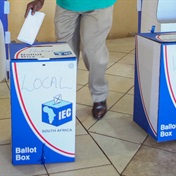
South Africa’s ruling African National Congress (ANC) lost significant support in the country’s municipal elections this week, according to early returns, garnering the worst results the party has seen since the end of apartheid, the Guardian reported Wednesday.

With more than half of polling stations reporting after Monday’s elections, the ANC appeared to have received slightly less than 46 percent of the vote, a new low: The ANC had always won more than 60 percent in every election since Nelson Mandela was sworn in as president in 1994.

The recent polls are seen as a referendum on a party, whose leaders and members, including former President Jacob Zuma, face corruption investigations.

Frustrations toward the governing party grew after rioting and looting gripped South Africa in July following Zuma’s imprisonment on contempt of court charges: He refused to testify during a corruption investigation. The unrest killed more than 354 people.

Meanwhile, ANC representatives have blamed the current results on the coronavirus pandemic, voter apathy and electricity blackouts. Even so, unemployment has hit 34 percent in Africa’s most industrialized nation.

Still, analyst Ralph Mathekga said the elections could be “a predictor for what is looming at the next general election.”

He explained that the party could be forced to govern in a coalition if it fails to go beyond the 50 percent threshold in the 2024 general elections.

M

Wednesday, November 3, 2021

Zimbabwe Is A Failed State Like Somalia With The Best Perfoming Stock Market In The World

 02 Nov

add bookmark

Zimbabwe stocks have rocketed 370% as investors seek cover

accreditation
-01:52
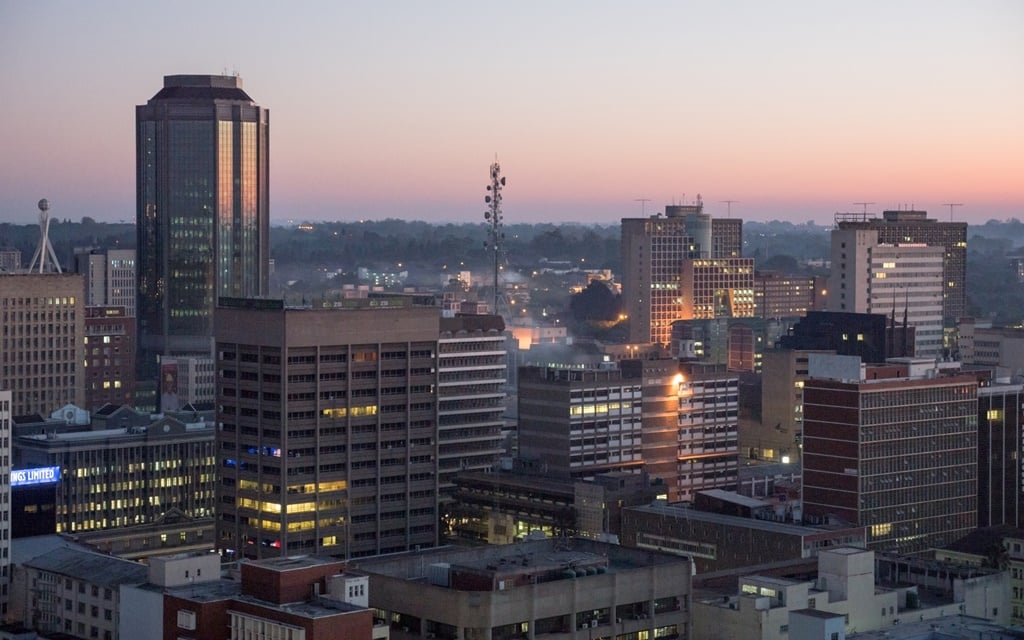
Harare. Photo: Getty
Timothy Marks

Zimbabwe stocks have paused for breath after soaring about 370% in 2021, a breakneck rally spurred by investors turning to the bourse as a haven against inflation.

Harare’s All Share Index posted a rare, four-day decline last week, with local market watchers saying the eye-watering gains had become overdone and a pullback was needed. “The market does seem to be cooling off,” said Thedias Kasaira, managing director at Imara Edwards Securities.

The excessive increase in share prices was captured in at least one technical indicator: the 14-day relative strength index on the benchmark Harare stock gauge peaked at almost 99 on October 21, when stocks took their gains to 367% since the start of the year. That’s well above the level of 70 that some technical analysts see as suggesting a market has risen too far and may be about to swing lower.

To be sure, it seems stocks may soon resume their ascent, given that investors have few other options and locals with cash prefer to buy shares to avoid their money losing value. Annual inflation in October quickened to 54.5% and the central bank last week raised its main lending rate to 60% in an attempt to tame that increase and to stabilize the free-falling Zimbabwe dollar.

"Inflation is beginning to tick up again, there is clearly anxiety around exchange rates and no real conviction from a policy perspective from the authorities, despite some cosmetic attempted solutions," said Lloyd Mlotshwa, head of research at Harare-based IH Securities. 

"That usually points to investors slipping back to hedging mentality," he said. "The only available legal and viable assets are really equities and property. Equities, at the very least, give you liquidity to enter and exit."

You have invested in the future
Your News24 subscription is an investment in independent journalism. Thank you. Your support strengthens our ability to hold power to account and unearth stories you can trust.
Read subscriber articles

Tuesday, November 2, 2021

Mocambique-The Deadly Price Of Safety


The Deadly Price of Safety

The Mozambican civil war from 1977 to 1992 decimated 90 percent of the elephant population living in the country’s Gorongosa national park.

The large mammals were poached for their ivory, which government and rebel forces collected to finance the conflict. Tuskless elephants, however, were left alone.

Recently, scientists studied how years of ivory poaching and a genetic mutation resulted in Gorongosa’s elephant population becoming predominately tuskless, the Guardian reported.

In their paper, a research team stipulated that tuskless females had the most offspring because they were not hunted by poachers. Nevertheless, previous researchers had questioned what the exact mechanics for this abnormality were.

It turned out that the phenomenon had a genetic origin and tended to affect mainly male elephants: The team discovered a genetic difference after they sequenced the genomes of tusked and tuskless elephants.

While the females had no issues carrying the tuskless traits, the latter was lethal to males, according to the New York Times.

That means that a female elephant has a 50-50 chance of giving birth to both tuskless and tusked females. But in males, only half would have no tusks, while the other half would die – perhaps before birth.

Robert Pringle of the department of ecology and evolutionary biology at Princeton University, which led the study, said it showed the impact of human interference in nature. “What I think this study shows is that it’s more than just numbers,” he told the Guardian. “The impacts that people have, we’re literally changing the anatomy of animals.”

Meanwhile, study co-author Shane Campbell-Staton told the Times that while elephants have evolved to be safer from poachers, this rapid change could be problematic in the long run.

“Selection always comes at a cost, and that cost is lives,” he said.