Tuesday, June 18, 2019

Egypt: A Trial, A Death

EGYPT

A Trial, A Death

Mohammed Morsi, Egypt’s first democratically elected president, died Monday after collapsing during his trial in a Cairo courtroom.
No cause of death has been released so far, the New York Times reported. But critics blamed inhumane treatment during his imprisonment for his failing health. The former president had been denied medicine for diabetes, high blood pressure and liver disease, and been held in solitary confinement for long periods, they claimed.
Morsi’s erstwhile political party, the Muslim Brotherhood, called it a case of “full-fledged murder,” according to Reuters, and urged Egyptians to gather for a mass funeral. Amnesty International urged Egypt to investigate the cause of the 67-year-old leader’s death, the agency reported separately. Specifically, the human rights watchdog called for an investigation into the medical treatment Morsi received.
In 2012, Morsi won Egypt’s first democratic presidential election following the Arab Spring uprising but he was removed from power a year later in a military takeover. He was facing trial for espionage, though he had been imprisoned on various other charges since 2013, the Times noted.

Thursday, June 13, 2019

Uganda: Diseases Without Borders

UGANDA

Diseases Without Borders

A 5-year-old boy died of Ebola on Wednesday in Uganda, becoming the first cross-border victim of a deadly outbreak that has so far been limited to Congo.
In response, an expert committee from the World Health Organization will meet Friday to again weigh whether to declare a global health emergency, the Associated Press reported.
With 1,400 people dead in Congo, the outbreak is already the second largest ever. Making matters worse, the authorities believe the risk it will spread to neighboring countries is high due to rebel attacks and local resistance that have hampered the medical response.
The boy who died was among a dozen or so people stopped at the border who already showed signs of suffering from the disease, which is fatal in up to 90 percent of cases. But six of them, including the 5-year-old, left the isolation center where they were sent and sneaked into neighboring Uganda, a local coordinator of response teams told the agency.
“Many people are evading (border) customs and using small footpaths and it is difficult for us to follow the contacts,” the aid worker said.

Wednesday, June 12, 2019

Botswana Legalizes Gay Sex

BOTSWANA

Ruling for Dignity

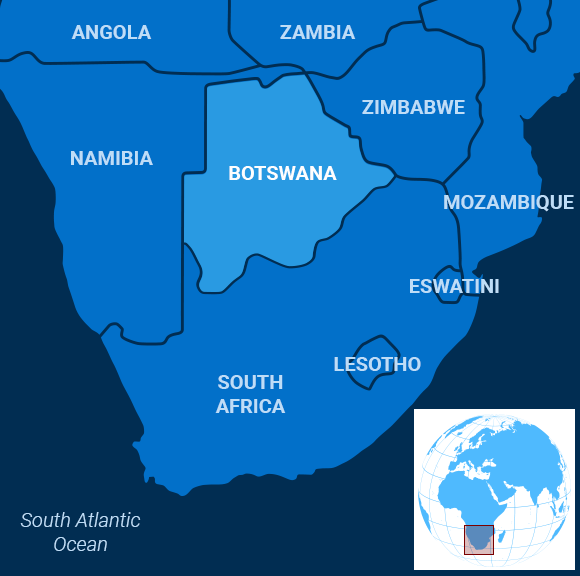
Botswana decriminalized gay sex on Tuesday, becoming the ninth country in the past five years to do so.
Activists packed the courtroom to celebrate as the High Court rejected laws punishing homosexual sex with up to seven years in prison in a landmark ruling for Africa, the Associated Press reported. The decision closely followed an opposite ruling in Kenya, where the High Court recently upheld similar laws.
Gay sex remains a criminal offense in 67 countries and territories, including more than two-dozen countries in Africa. However, earlier this year, the southern African nation of Angola decriminalized same-sex activity and banned discrimination based on sexual orientation, the agency noted.
A Botswana-based nonprofit called LEGABIBO had supported an anonymous petitioner to take the case to the High Court, arguing that laws criminalizing gay sex between consenting adults “infringe on basic human dignity.”
The group shared a statement attributed to President Mokgweetsi Masisi saying people in same-sex relationships should not have to suffer in silence or fear discrimination. “Just like other citizens, they deserve to have their rights protected,” he said.
M

Tuesday, June 11, 2019

Mali: An Eye FOr An Eye

MALI

An Eye for an Eye

Unknown assailants slaughtered at least 95 people in a village in central Mali on Monday, marking a possible escalation of an ethnic conflict that has been energized by Islamist extremists.
Nineteen people remained missing after the attack on the ethnic Dogon village of Sobame Da around 3 a.m. Monday, Interior Security Ministry spokesman Amadou Sangho told the Associated Press.
No one has claimed responsibility for the attack so far. But tensions between the Dogon and Peuhl ethnicities have been running high since a Dogon militia was blamed for an earlier massacre of a Peuhl village that killed at least 157 people in March, the agency noted. Following that incident, some Peuhl leaders had vowed they would get revenge.
Mali has long battled Islamist extremism in its northern region, prompting a French-led military intervention in 2012. But now the extremists are influencing communities in the south – with the Dogon accusing the Peuhl of conspiring with Islamic State to attack them and the Peuhl accusing the Dogon of collaborating with the country’s military.

Thursday, June 6, 2019

Sudan: The Bloody 100

SUDAN

A Bloody Hundred

The death toll from the military crackdown on the protest movement in Sudan over the past few days reached more than 100 people on Wednesday.
“To this moment, the total number of deaths that have been accounted by doctors is 101,” the Central Committee of Sudanese Doctors said, citing the retrieval of 40 bodies from the Nile River by the paramilitary Rapid Support Forces, Al Jazeera reported. Later, Reuters reported that the government health ministry pegged the death toll at 46.
In the wake of the carnage, military council head General Abdel-Fattah Burhan offered to re-open negotiations without preconditions. But a spokesman for one of the groups leading the demonstrations said the protesters “totally reject” that proposal and accused the military council of offering negotiations while terror still reigns in the streets.
“This call is not serious,” Mohammed Yousef al-Mustafa, spokesman for the Sudanese Professionals Association, told the Associated Press. “Burhan and those under him have killed the Sudanese and are still doing it. Their vehicles patrol the streets, firing at people.”

Botswana: A Gift Of Elephant's Feet

BOTSWANA

Politics & Pachyderms

Approximately 450,000 elephants roam Africa. Poachers kill around 30,000 annually.
Do the math.
At that rate of illegal hunting, the days of the world’s largest land animal are numbered.
So one might question the optics of Botswanan President Mokgweetsi Masisi giving footstools made from elephant feet to his counterparts from Namibia, Zambia and Zimbabwe early last month at a meeting to discuss how to save the animals, the BBC reported.
The presidents’ plans might also surprise many. Along with South African leaders, they want to lift their countries’ bans on hunting elephants so they might sell ivory to raise money for conservation projects while giving local communities leeway to deal with animals that sometimes ruin crops and pose dangers to families.
Last month, Masisi lifted Botswana’s five-year ban on hunting the pachyderms. The move shocked animal rights advocates because they have long considered Botswana, where one-third of Africa’s elephants live, a conservation success story. “The whole world is turning away from hunting,” Kenyan ecologist Paula Kahumbu said in an interview with the Guardian. “It is increasingly seen as an archaic practice.”
Defenders of the policy portrayed those critics as naïve.
“By sacrificing 700 elephants per year we’re likely going to save more,” Botswana-based wildlife veterinarian Erik Verreynne toldthe New York Times.
Verreynne might have a point. Poaching is closely correlated to poverty and corruption, according to National Geographic. Crafting policies that help officials exert control over elephant hunting might help address some of the social ills that give rise to it in the first place.
But the same studies cited in National Geographic also suggested that law enforcement was usually not a deterrent to poaching. In other words, rangers either didn’t stop poaching or they were complicit in it. If authorities can’t tackle illegal hunting now, will they be able to enforce regulations on legal hunting?
That said, elephant poaching in general is in decline, according to independent analysts, reported the Press Association, a British news agency.
Politics might be a better lens for considering this issue.
Botswana holds a general election in October. Lawmakers then electa new president. Given how lifting the ban is based on a plethora of myths about elephant numbers, Masisi’s decision was likely designed to curry favor with rural voters, argued economist Ross Harvey in the Daily Maverick, a South African online newspaper.
If elephants could vote, would Masisi change his mind? He just might if he visited the elephant (and rhino) orphanage operated by the Sheldrick Wildlife Trust near Nairobi, Kenya. Here, most visitors are visibly moved by the gentle young elephants that still mourn their parents – killed by poachers.